A Curious Case for Watercolour Paper
Part Two of the "Oh My God... I Love Paper" series.
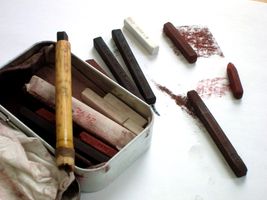
If you've ever looked at a class supply list and wondered, "What is Conté?" you're not alone. It's one of the questions we're asked often at Hues. Conté isn't quite charcoal, graphite or pastel. Instead, it's a unique drawing material with a fascinating history that stretches back more than two centuries and an inventor whose work changed the way artists draw forever.
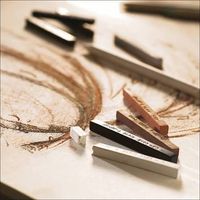
What is Conté? Conté is a professional drawing material made from pigments, clay and natural binders. Firmer than charcoal yet more expressive than graphite, Conté has been a favourite for life drawing, portraiture and sketching for more than 200 years.
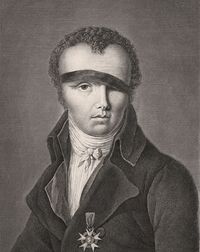
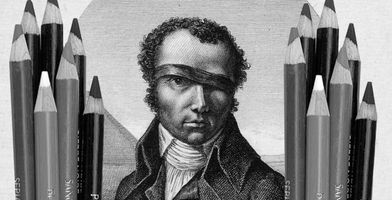
So who is this guy?
Not another Revolution!
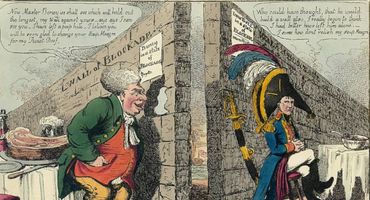
A National Crisis
France's solution arrived in the form of Nicolas-Jacques Conté. Rather than searching for another source of pure graphite, he approached the problem from an entirely different direction. If solid graphite was no longer available, perhaps pencils no longer needed to be made from solid graphite at all.
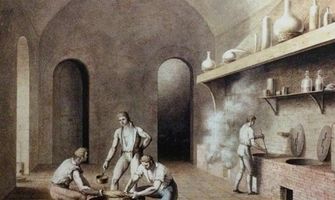
Conté began experimenting with lower-quality powdered graphite, mixing it with carefully measured amounts of clay and water before forming the mixture into slender rods and firing them in a kiln. By changing the ratio of graphite to clay, he discovered he could control the hardness of the lead. More graphite produced a softer, darker pencil, while more clay created a harder lead capable of finer, lighter lines. This simple idea gave rise to the familiar grading system we still use today—from the hard H pencils through HB, right up to the soft, dark B grades.
It was an elegant solution to a national crisis. More importantly, it transformed the way pencils were made. The process Conté developed in 1795 became the foundation of the modern graphite pencil and is still used by manufacturers around the world today.
As the old saying goes, necessity is the mother of invention. Few stories illustrate that better than Nicolas-Jacques Conté's. What began as a national shortage of graphite became one of the most important innovations in the history of drawing.
Just think about that. The 2B pencil you reached for today owes its existence to a French inventor who refused to accept that France could no longer make pencils without British graphite. That's history, baby—history in a pencil.
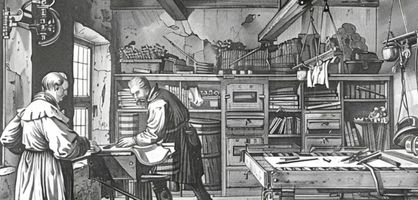
But this story didn't end with the pencil.
More than two centuries after Nicolas-Jacques Conté transformed the way pencils were made, artists around the world continue to discover the unique qualities of Conté drawing materials. Whether you're beginning your first life drawing class, exploring traditional sketching techniques or adding expressive mark making to your work, Conté remains one of the most versatile drawing materials ever created.We invite you to explore our complete collection of
Conté à Paris crayons, pencils and drawing sets and discover why generations of artists have continued the story that Nicolas-Jacques Conté began in 1795.