Lana Cowell | 7 days ago

Oh My God...I Love Paper

Sometimes it isn't the glitzy, glamorous pigments or brilliant colours that deserve the most admiration.

Sometimes it's the quiet, foundational things.

You know...Like trees….Or paper.

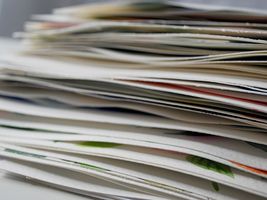
Paper Holds the Idea

As artists, we often talk about paint, our favourite brushes, the newest pigment sticks, or that wonderful little doohickie that does exactly what we hoped it would. But behind every drawing, every watercolour, every print, and every sketch is something quietly doing its job.

Paper. I know you think I am losing it, right? But just ponder this for a moment

Paper asks for no attention. It simply supports the work, holds the idea, survives the process, and preserves the result.

Paper holds the idea.

Isn't that worth loving?

A State Secret?

Invented in China, the making of paper was a state secret and that secret was guarded for hundreds of years. Seriously... paper was classified technology. Eventually the secret escaped—whether through trade, captured papermakers, or a little of both—and the Islamic world ran with it, building paper mills and great centres of learning.

By the time paper became common in medieval Europe, it had already spent centuries helping scholars in China record history and preserve knowledge. In the Islamic world, it helped scholars translate, preserve, and build upon Greek, Persian, and Indian texts, allowing ideas to travel across cultures and generations. It's a wonderful reminder that the story of civilization doesn't belong to one culture. The greatest ideas have always travelled. And paper made it all possible.


Not bad for something we doodle on while we're talking on the phone.

Enough history.

Let's talk about the fun part.

Because somewhere along the way, artists looked at one of humanity's greatest inventions and said, "That's nice... but can we paint on it?"

The answer, of course, was yes.

Today there are papers made specifically for watercolour, printmaking, drawing, pastel, mixed media, acrylic, and just about every creative pursuit you can imagine. They may all look like "paper," but trust me—they are anything but the same.

So let's get to the tooth of the matter.

Did you say tooth?

The quicker picker upper

Sketching papers are like good conversations. They're quick, spontaneous, and don't ask for a commitment. They're made for ideas, not masterpieces. They happily accept graphite, charcoal, and the occasional coloured pencil. They'll tolerate a bit of erasing, but if you're the type who erases every second line until the paper waves a white flag, you may want to move up to a true drawing paper.

Ideas have a habit of arriving in the strangest places—on a park bench, in a coffee shop, while travelling, or in the few quiet minutes before a meeting begins. That's why sketch papers are so often found in journals and sketchbooks. They're portable, lightweight, and generally affordable enough that you don't hesitate to fill page after page with experiments, observations, and half-formed ideas. After all, every finished painting or drawing usually begins as a simple sketch.

Most sketch papers are made from wood pulp rather than cotton, which helps keep them lightweight and economical. Many are acid-free and suitable for everyday use, but not all are intended for long-term archival storage. If preserving your work for generations is important, it's always worth checking the paper's specifications before choosing your sketchbook.

The strong silent type

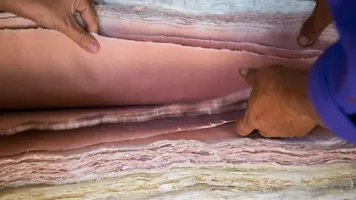
Drawing papers are a little more patient. They expect you'll be staying awhile. They're heavier, stronger, and better able to withstand repeated erasing, layering, blending, and careful rendering. If sketch paper is for capturing an idea, drawing paper is for developing it. Funny thing about drawings—they often begin as practice and quietly become favourites.

Drawing papers are available in pads, sketchbooks, and loose sheets, giving artists the freedom to choose the format that best suits their work. Many of the finest drawing papers are made from 100% cotton fibres, prized for their strength, durability, and archival qualities. Others are made from carefully processed wood pulp and can offer excellent performance at a more affordable price.

So why do some papers turn yellow while others seem to stay bright for generations? The answer is a natural substance called lignin, which is found in wood. As lignin breaks down over time, it creates acids that gradually cause paper to yellow and become brittle. Many modern drawing papers are acid-free and buffered to slow this process, and high-quality wood-pulp papers can last for many years. If you're creating artwork you hope will be enjoyed for generations, look for papers that are both acid-free and lignin-free, or choose a 100% cotton paper designed for archival use.

If you've come this far, you've probably discovered that paper is much more than simply a surface to draw on. Different papers do different jobs, and they're surprisingly good at them. After all - paper has been with us for over 2000 years! Once you understand a few simple characteristics, choosing the right paper becomes less about guesswork and more about finding the one that's right for you. Also, your friendly neigborhood Hues Staff person can advise you.

Next time we're going to talk about something artists have been doing for centuries.


We're going to get paper wet.


Thanks for spending a little time with us today. Our Hues community makes us what we are.

Report Abuse

Images, graphics and text are copyright of Hues Art Supply Ltd